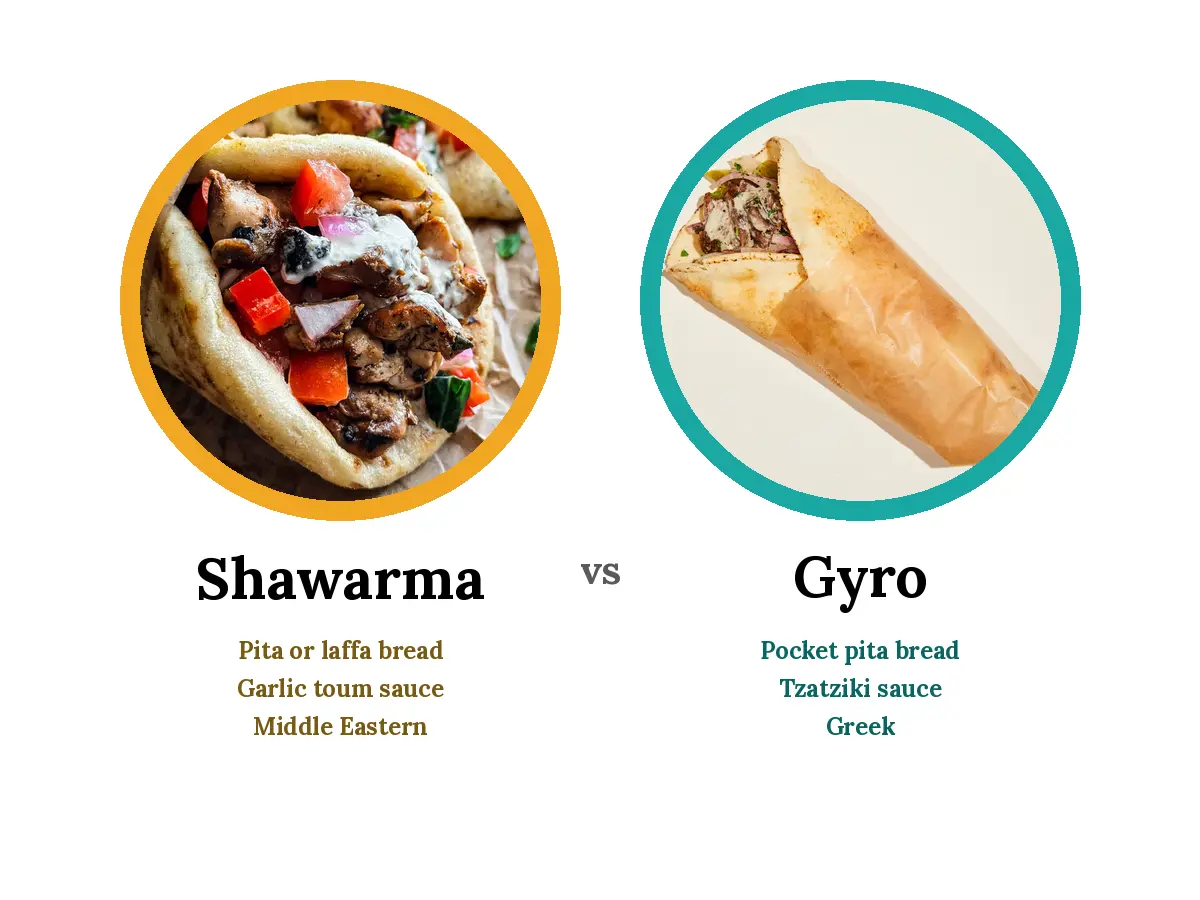

Shawarma and gyro look similar thin slices of meat carved from a vertical rotisserie — but they come from different culinary traditions. Shawarma is a Levantine and Middle Eastern dish seasoned with warm spices and served with tahini or garlic sauce. Gyro is Greek, seasoned with Mediterranean herbs and served with tzatziki. Same cooking method, very different flavor.
Here at Al-Basha in Paterson, NJ, we serve authentic Middle Eastern shawarma chicken and beef, carved fresh to order. Guests sometimes ask how it compares to a gyro, so here’s a clear, detailed side-by-side.
What Is Shawarma?
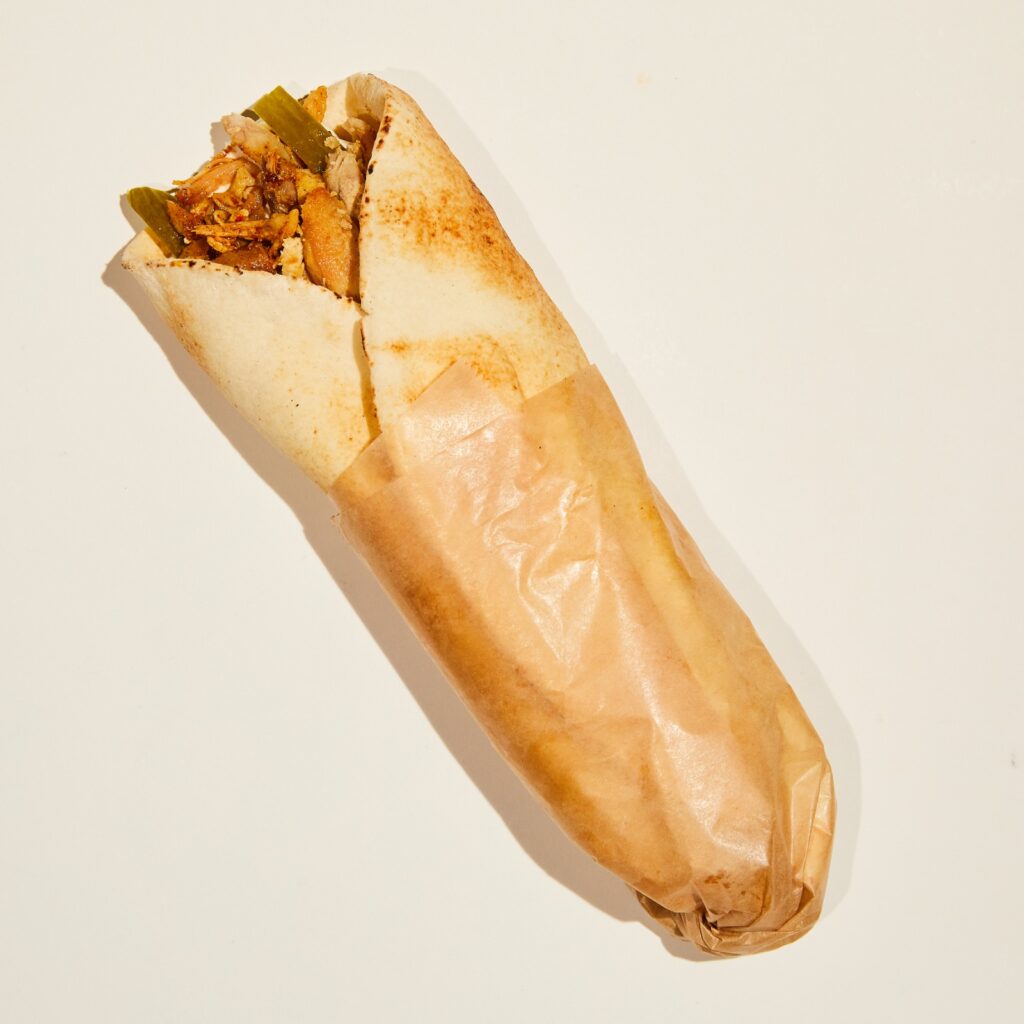
Shawarma originated in the Levant the region that includes Palestine, Lebanon, Syria, and Jordan — during the Ottoman era. Thin cuts of marinated meat are stacked on a vertical spit, slow-roasted as the outer layer crisps, then shaved off in tender slices.
What defines shawarma is the spice profile: warm, aromatic blends of cumin, coriander, cardamom, turmeric, cinnamon, garlic, and black pepper. It’s typically wrapped in soft pita or laffa with tahini or garlic sauce (toum), pickles, and fresh vegetables. You can read our full shawarma guide for the deeper history and how it’s made.
What Is a Gyro?
Gyro (pronounced YEE-roh) is the Greek cousin of the same spit-roasting technique. In Greece it’s traditionally made with pork or chicken; in the U.S. you’ll often find a seasoned beef-and-lamb blend.
The seasoning leans Mediterranean-herbal — oregano, thyme, rosemary, and marjoram — rather than the warm Middle Eastern spices of shawarma. A gyro is wrapped in a thicker Greek-style pita and finished with tzatziki, a cucumber-yogurt-garlic sauce, plus tomato and onion.
Shawarma vs Gyro: The Key Differences
| Feature | Shawarma | Gyro |
| Origin | Levant / Middle East | Greece |
| Typical meat | Chicken, beef, lamb | Pork or chicken (beef-lamb blend in the U.S.) |
| Spices | Cumin, coriander, cardamom, turmeric, cinnamon | Oregano, thyme, rosemary, marjoram |
| Signature sauce | Tahini or garlic sauce (toum) | Tzatziki (yogurt-cucumber) |
| Bread | Soft pita or laffa | Thicker Greek pita |
| Marinade base | Yogurt or oil with warm spices | Oil, lemon, and herbs |
| Common sides | Rice, fattoush, hummus, pickles | Greek salad, fries, tzatziki |
| Flavor | Warm, aromatic, savory | Herby, tangy, bright |
Both share a common ancestor: the Turkish döner kebab, which is where the vertical-rotisserie method comes from. Shawarma and gyro are essentially two regional interpretations of that same idea, shaped by the spices, sauces, and breads native to each culture.
Where the Difference Between Shawarma and Gyro Really Comes From
The core difference between shawarma and gyro isn’t the cooking method — it’s everything layered on top of it:
- Marinade. Shawarma meat is typically marinated in a blend of warm spices and sometimes yogurt or vinegar, giving it a deep, earthy aroma. Gyro meat is marinated with olive oil, lemon juice, and Mediterranean herbs, giving it a brighter, more citrus-forward profile.
- Sauce. Tahini and garlic sauce (toum) are nutty, garlicky, and rich. Tzatziki is cool, tangy, and yogurt-based. This single difference changes the entire flavor experience of the wrap.
- Bread. Shawarma is usually wrapped in thin, soft pita or laffa that folds easily around the fillings. Gyro bread tends to be thicker and slightly chewier, built to hold up to fries and tzatziki without falling apart.
- Regional sides. Shawarma plates often come with rice, fattoush, or hummus. Gyro plates lean toward Greek salad, fries, or lemon potatoes.
Shawarma and Gyro Meat: What’s Actually Used
Meat choice is one of the most common points of confusion between the two dishes.
- Shawarma in the Middle East is most often chicken, beef, or lamb, sometimes a mix. In Levantine restaurants like Al-Basha, chicken and beef shawarma are the standard, each marinated separately and stacked on their own spit.
- Gyro in Greece is traditionally pork or chicken, since pork isn’t part of Levantine halal cuisine. In the U.S., gyro meat is frequently a pre-seasoned beef-and-lamb blend, formed into a cone rather than stacked from individually marinated cuts.
This is also where dietary considerations come in — because shawarma is rooted in Middle Eastern cuisine, it’s typically halal, while traditional gyro (especially pork versions) is not.
Are Shawarma and Gyro Healthy?
Both dishes can fit into a balanced diet, but the details matter:
- Protein and fat. Chicken shawarma tends to be leaner than beef gyro, especially when trimmed of excess fat before roasting.
- Sauce calories. Tahini and garlic sauce are calorie-dense but flavorful in small amounts. Tzatziki is lighter, since it’s yogurt-based, but toppings vary by portion.
- Bread and wrap size. Thicker gyro pita adds more carbohydrates per wrap compared to thinner shawarma pita or laffa.
- Vegetables. Both dishes typically include fresh vegetables — tomato, onion, and pickles for shawarma; tomato and onion for gyro — which helps balance the plate either way.
For a closer look at how shawarma fits into a broader diet, along with nutrition breakdowns by cut, see our guide to beef and lamb shawarma wraps and plates.
Shawarma and Gyro Around the World
While shawarma and gyro are the most recognized names, the same vertical-rotisserie technique shows up under different names across the region:
- Döner kebab — the Turkish original, seasoned simply with salt, pepper, and sometimes paprika.
- Shawarma — the Levantine and broader Middle Eastern version, built around warm spice blends.
- Gyro — the Greek adaptation, built around Mediterranean herbs and tzatziki.
- Tacos al pastor — a Mexican descendant of the same technique, brought over by Lebanese immigrants and adapted with achiote, pineapple, and chili.
Tracing the lineage helps explain why these dishes feel so familiar to each other despite tasting so different — they all grew from the same rotisserie tradition, then took on the flavor identity of wherever they landed.
Common Misconceptions About Shawarma vs Gyro
A few mix-ups come up often enough to be worth clearing up directly:
- “They’re the same dish with different names.” Not quite — while the cooking method is shared, the spices, sauces, meats, and cultural roots are distinct.
- “Shawarma is just spicy gyro.” Shawarma isn’t necessarily spicy; its spice blend is warm and aromatic (cumin, cardamom, cinnamon) rather than hot.
- “Gyro is always beef and lamb.” That blend is common in the U.S., but traditional Greek gyro is usually pork or chicken.
- “Tzatziki and garlic sauce are interchangeable.” They serve a similar creamy role in the wrap, but tzatziki is yogurt-and-cucumber based while garlic sauce (toum) is oil-and-garlic based with no dairy at all.
So Which One Should You Order?
If you love warm, spice-forward meat with tahini or garlic sauce, that’s shawarma — and it’s what we do at Al-Basha. If you prefer the herb-and-yogurt profile of tzatziki, that’s the gyro experience.
We focus on authentic Levantine cooking, so you won’t find a gyro on our menu, but you will find shawarma carved fresh from the spit, in sandwiches and on platters served with rice, salad, and our house dips. See the full lineup on our menu, or dig into the details of our beef and lamb shawarma.
Ready to taste the difference? Order pickup or delivery from Al-Basha in Paterson, NJ.
Frequently Asked Questions
What is the difference between shawarma and gyro?
Both are spit-roasted meats, but shawarma is Middle Eastern, seasoned with warm spices like cumin and coriander and served with tahini or garlic sauce, while gyro is Greek, seasoned with herbs like oregano and served with tzatziki.
Is shawarma healthier than gyros?
They’re similar nutritionally. Chicken shawarma tends to be leaner, and shawarma is often dressed with tahini or garlic sauce rather than a creamy yogurt sauce. The healthiness depends mostly on the meat, portion, and sauce.
Are shawarma and gyro the same thing?
No. They use the same vertical-rotisserie cooking method and share a common ancestor in the Turkish döner kebab, but they differ in origin, spices, sauces, and bread.
Does Al-Basha serve gyro?
No. Al-Basha specializes in authentic Middle Eastern cuisine and serves chicken and beef shawarma carved fresh to order, rather than Greek-style gyros.
How do you pronounce gyro and shawarma?
Gyro is pronounced “YEE-roh.” Shawarma is pronounced “shuh-WAR-muh.”
What is shawarma made of?
Shawarma is made of thin cuts of marinated chicken, beef, or lamb, stacked on a vertical spit and seasoned with warm spices like cumin, coriander, cardamom, turmeric, and cinnamon, then shaved and served in pita or laffa with tahini or garlic sauce.