
Shawarma is a Middle Eastern dish made by stacking seasoned meat — chicken, beef, lamb, or veal — on a vertical rotating spit, slow-roasting it, and shaving thin slices into warm flatbread. Topped with garlic sauce, tahini, pickles, and fresh vegetables, it originated in the Ottoman Empire and is today one of the world’s most popular street foods.
In today’s blog, we’ll take you on a delicious journey through everything you need to know about Shawarma. From its fascinating origins and history to how it’s made, we’ll cover it all.
You’ll discover the traditional flavors that make Shawarma unique, and learn how it compares to the famous Gyro. We’ll also dive into its nutritional content, helping you understand why it’s not just tasty, but also nutritious.
Want to taste authentic shawarma in New Jersey? Order from Al-Basha
The Origin and History of Shawarma
The technique of grilling meat on a vertical spit likely started in the Ottoman Empire in the 19th century. However, similar methods existed earlier in the Middle East and Central Asia. The meat is stacked vertically and slowly roasted, with the outer layers being shaved off as they cook.
This method led to the creation of Shawarma in the Levant. It also influenced Gyros in Greece. While both use the same cooking style, their seasonings and flavors are different.
Although Shawarma originated in Turkey, it is incredibly popular in Arab nations and, today, across the globe. Shawarma can be made using lamb, beef, goat, chicken, or a mix of these meats. The most common bread used is pita, but taboon bread or tabouli can also be used as a wrap. Shawarma is typically served as a wrap, but sometimes as a sandwich, and is topped with cucumber, tomatoes, green chili, and other pickled vegetables.
In modern times, shawarma has become a global street food icon, commonly found in food trucks, restaurants, and fast-food chains. Its popularity is driven by its rich aroma, quick preparation style, and ability to be customized according to local tastes. Different regions have developed their own variations by adjusting spices, sauces, and serving styles, making shawarma a highly versatile dish enjoyed worldwide.
For step-by-step instructions on cooking, you can learn how to make shawarma and kabobs in our detailed guide.
What is Shawarma is Made Of?
The preparation of Shawarma begins behind the scenes with the marination of the chicken. The marination process involves slathering the meat with oil or fat, adding basic spices, yogurt, and lemon juice. While it’s typically marinated overnight, 3 hours can be sufficient as the marinade is intense.
Once marinated, the Shawarma is made by stacking the chicken, meat, or beef vertically on a rotating spit. As the spit spins, the meat is slowly grilled from both sides. Using a large knife, the meat is shaved off the stack and placed in a tray before being wrapped in warm bread with sauces and veggies.
The Main Ingredients of Shawarma
Foundation:
- Pita Bread
- Lavash
- Taboon Bread
- Tabouli
Basic Ingredients and Toppings:
- The meat of your choice (chicken, beef, etc.)
- Hummus
- Garlic Mayonnaise
- Chilli Sauce
- Minced Garlic
- Curry Powder
- Olive Oil
- Lemon Juice
- Powdered Cumin
- Roumania (Garlic Sauce)
- French Fries
Want to try different flavors at home? Explore our shawarma recipes for beef, lamb, and more
What Are Traditional Shawarma Flavors?
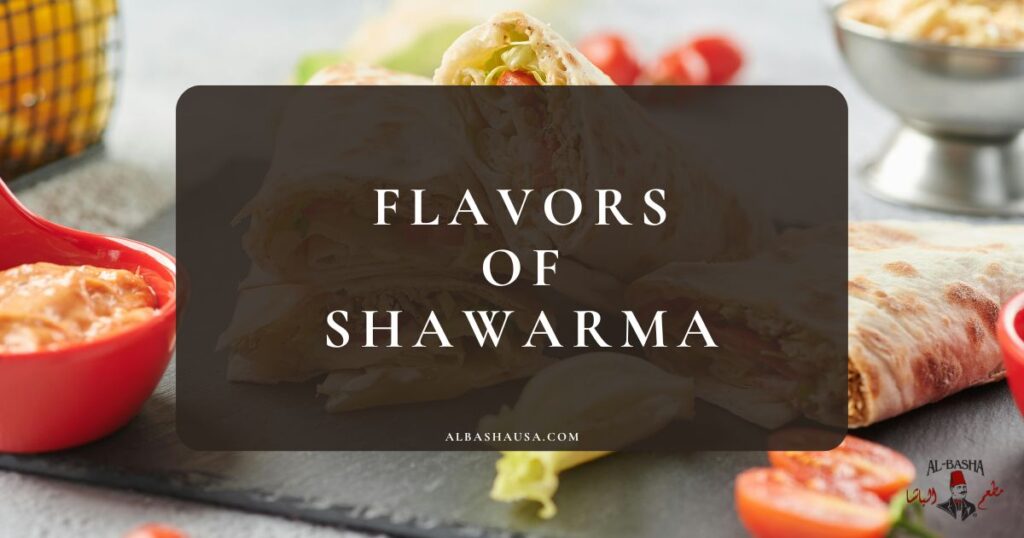
The base of Shawarma remains the same, with roasted chicken, beef, or meat wrapped in pita bread and topped with vegetables. The flavor varies based on the type of meat used.
- Chicken Shawarma: The most common type, loved globally for its tender texture and mild taste.
- Beef Shawarma: Has a richer and stronger flavor, ideal for those seeking a heartier option.
- Veal Shawarma: A lighter alternative to beef, known for its soft and juicy texture.
- Turkey Shawarma: A milder choice for health-conscious individuals who don’t want to compromise on taste.
- Lamb Shawarma: Common across the Middle East, this version uses lamb and has a bold, distinct flavor.
- Saudi Arabian Shawarma: Filled with chicken, French fries, and lettuce for a unique take on the dish.
Shawarma vs Gyro: What’s the Difference?
Shawarma and Gyro are both popular street foods made from meat cooked on a vertical rotisserie, but they have distinct origins and flavor profiles.
Shawarma hails from the Middle East, while Gyro is a staple of Greek cuisine. Despite their similar cooking methods, the seasonings, meats, and toppings differ, giving each dish its own unique taste.
In this section, we’ll explore the key differences between these two delicious dishes.
| Shawarma | Gyro |
| It’s a Middle Eastern cuisine. | It’s a Greek sandwich. |
| Made from chicken, beef, or lamb. | Traditionally made from pork or chicken, though beef and lamb are now also used. |
| Seasoned with turmeric, cinnamon, cardamom, and other regional spices. | Seasoned with oregano, rosemary, thyme, and other Greek herbs. |
| Flavor is deep, savory, and smoky. | Lighter in flavor. |
| Typically served with tahini, hummus, and pickles. | Generally served with tzatziki, tomatoes, onions, and lettuce. |
You can read here about mediterranean food vs greek.
Is Shawarma Healthy?
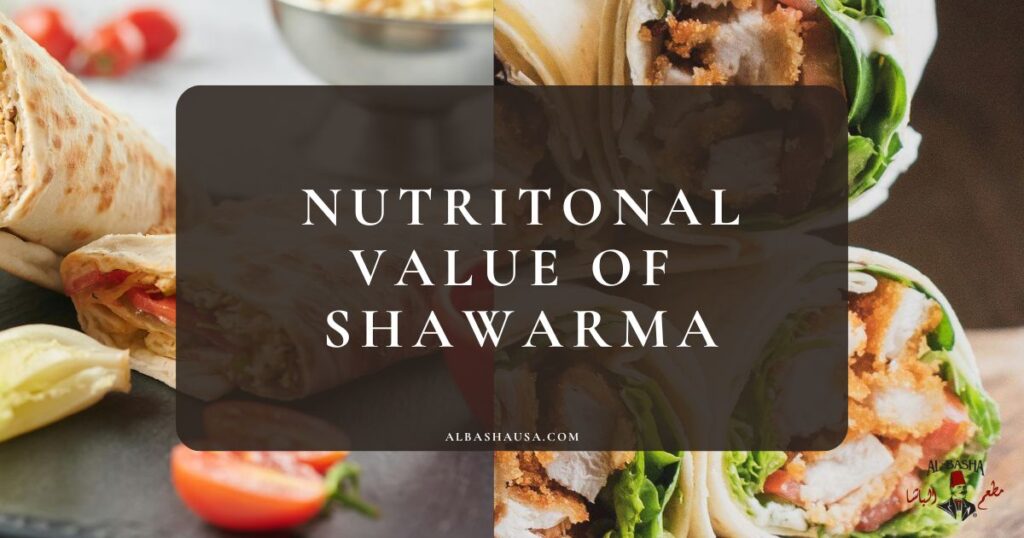
Shawarma can be a healthy food choice when consumed in moderation. It’s high in protein but also contains a significant amount of fat and calories. Shawarma is a complete meal that can keep you feeling full and satisfied for a long time. Below is an average nutritional value of Shawarma:
- Serving Size: 270-280 grams
- Calories: 450-460 kcal
- Carbs: 35-40 grams
- Proteins: 40-50 grams
- Fiber: 4.5 grams
- Total Fat: 20-25 grams
- Saturated Fat: 7.2-10 grams
- Sodium: 1000 mg
While this is the general content, note that the calories can vary depending on the preparation method, meat type (chicken, beef, etc.), and additional toppings or sauces.
Health Benefits of Shawarma:
- Protein-Rich: Shawarma is a great source of protein, which is essential for muscle recovery.
- Fiber: The fiber content helps support digestion.
- Vitamins and Minerals: Shawarma provides essential nutrients like Vitamin A, Vitamin C, calcium, magnesium, and iron.
- Satiety: It keeps you full for a long time.
For weight loss, skipping the bread and enjoying Shawarma with just the chicken and toppings is a healthier option.
Shawarma is high in protein and fiber, making it a satisfying and nutritious choice. Looking for healthy Mediterranean meal ideas? Check out what you can eat with Shawarma for a complete Mediterranean meal.
Best Middle Eastern Shawarma Restaurant in New Jersey
Enjoy the mouthwatering shawarma at Al-basha, made with grilled roasted chicken, wrapped in a warm bread, layered with sauces and toppings. Enjoy it in a warm, cosy ambiance or order online today.
If you’ve ever wondered which truly stands out in history, flavor, and popularity, don’t miss our detailed breakdown of Kebab vs Shawarma.
FAQs:
Q1: What spices are used in shawarma?
Shawarma gets its distinctive flavor from a blend of warm Middle Eastern spices. A classic chicken shawarma marinade typically includes 1 tsp cumin, 1 tsp paprika, ½ tsp turmeric, ½ tsp cinnamon, ¼ tsp cardamom, ¼ tsp black pepper, and a pinch of cloves per 500g of meat. Garlic, lemon juice, olive oil, and plain yogurt are added to tenderize the meat and help the spices absorb deeply. Beef and lamb shawarma often include allspice and nutmeg for a deeper, richer flavor. At Al-Basha in Paterson, NJ, we use a traditional spice blend refined over years of authentic Middle Eastern cooking.
Q2: How many calories are in chicken shawarma?
A standard chicken shawarma wrap (approximately 270–280g) contains 450–460 calories. This includes roughly 40–50g of protein, 35–40g of carbohydrates, 20–25g of total fat, 4.5g of fiber, and around 1,000mg of sodium. Calorie counts vary depending on the bread type, sauces added, and serving size. A wrap without bread (just the chicken and toppings) is significantly lower in calories and carbs, making it a popular option for those managing their diet. Chicken shawarma is generally leaner than beef or lamb versions.
Q3: Is shawarma halal?
Traditional shawarma is halal by nature — the dish originated in the Middle Eastern and Ottoman culinary tradition, where all meat is prepared according to Islamic dietary law. However, not every restaurant serves halal shawarma. At Al-Basha restaurant in Paterson, New Jersey, all our shawarma is 100% halal, made with certified halal chicken and beef prepared in accordance with Islamic guidelines. Always confirm with the specific restaurant whether their meat is halal-certified before ordering.
Q4: What is the difference between shawarma and kebab?
Both shawarma and kebab are Middle Eastern grilled meat dishes, but they differ significantly in preparation and presentation. Shawarma is made by stacking marinated meat on a vertical rotating spit and slowly roasting it — the outer layers are shaved off as they cook and served in a wrap or flatbread. Kebab, by contrast, refers to meat (ground or cubed) skewered and grilled over direct heat. Shawarma always comes wrapped; kebab is typically served on a plate with rice or bread on the side. The spice profiles also differ — shawarma uses warming spices like cumin and cinnamon, while kebab seasoning varies widely by region.
Q5: How is shawarma different from a burrito?
Shawarma and burritos are both handheld wraps, but they come from entirely different culinary traditions. Shawarma is a Middle Eastern dish using pita or flatbread, filled with roasted spiced meat (chicken, beef, or lamb), tahini, hummus, pickled vegetables, and garlic sauce. A burrito is a Mexican dish using a large flour tortilla filled with rice, beans, cheese, salsa, and meat seasoned with Latin spices like chili and cumin. The key differences are the bread (pita vs. tortilla), the sauce (tahini/hummus vs. salsa/sour cream), and the spice profile (Middle Eastern warming spices vs. Latin chili-based seasoning).
Q6: What bread is used in shawarma?
The most common bread used in shawarma is pita bread — a soft, round, slightly leavened flatbread that is easy to wrap and holds fillings well. Taboon bread, a thicker flatbread baked in a traditional clay oven, is also widely used, especially in Palestinian and Jordanian shawarma. Lavash, a thin Armenian flatbread, is another popular option that gives a crispier wrap. In some regions, saj bread (a paper-thin flatbread cooked on a convex griddle) is preferred for its soft texture. The choice of bread can significantly affect the overall taste and texture of the shawarma wrap.
Q7: Can you make shawarma at home?
Yes, shawarma can be made at home without a vertical spit. The key is in the marinade — combine olive oil, lemon juice, yogurt, garlic, cumin, paprika, turmeric, cinnamon, and cardamom, and marinate your chicken or beef for at least 3 hours (overnight is best). At home, the marinated meat is spread flat and roasted in the oven at 220°C (425°F) for 25–30 minutes, or cooked on a stovetop grill pan. Slice it thin after cooking to mimic the shaved texture of a traditional spit-roasted shawarma. Serve in warm pita bread with garlic sauce, pickled vegetables, and hummus.
Q8: Is shawarma Mediterranean food?
Yes, shawarma is considered Mediterranean food. It originated in the Ottoman Empire (modern-day Turkey) in the 19th century and became deeply rooted in Levantine cuisine, covering countries like Lebanon, Syria, Jordan, and Palestine. These countries all border the Mediterranean Sea, placing shawarma firmly within the Mediterranean food tradition. The ingredients — olive oil, lemon, garlic, flatbread, and fresh vegetables — are all hallmarks of the broader Mediterranean diet. Today, shawarma is one of the most recognized Mediterranean street foods in the world.