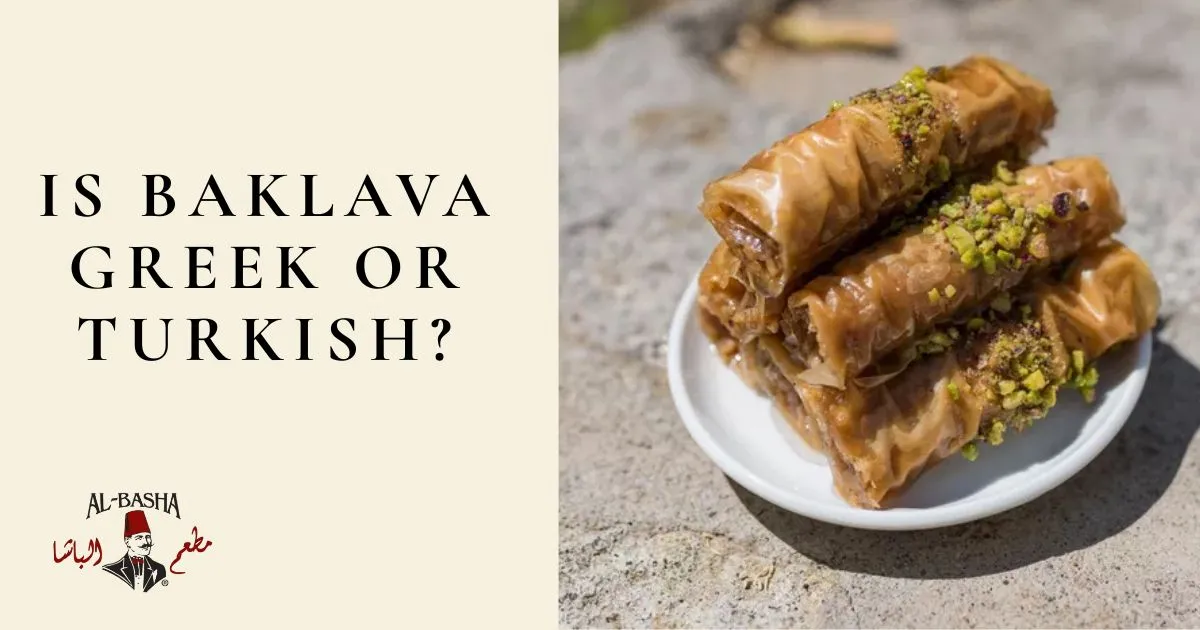

Is baklava Greek or Turkish? The short answer is both, and neither. While Greek baklava is famous for its honey, walnuts, and cinnamon, historians generally trace the dessert’s evolution through the Ottoman Empire, with earlier roots in ancient Mesopotamia. Today, baklava is considered a shared culinary tradition across Greece, Turkey, and the Middle East.
Baklava is a layered pastry made with thin phyllo dough, nuts, and sweet syrup or honey. While many people ask is baklava Greek, the dessert did not originate in a single country. Its roots trace back through the Ottoman Empire and earlier civilizations across the Eastern Mediterranean and Middle East.
Greek baklava is distinguished by walnuts, warm spices like cinnamon, and a honey-based syrup, while Turkish versions often feature pistachios and a lighter sugar syrup. Today, baklava is best understood as a shared regional dessert shaped by centuries of cultural exchange rather than a food owned by one nation.
Why People Ask: Is Baklava Greek?
Baklava is strongly associated with Greek restaurants, bakeries, and celebrations, especially in the United States. For many diners, their first exposure to baklava is at a Greek restaurant, served after a meal with coffee. That visibility naturally leads to the assumption that baklava is Greek.
In Greece, baklava holds a respected place at holiday tables, weddings, and religious celebrations. Recipes are passed down through families, often with precise traditions such as the number of phyllo layers or the spice blend used in the filling. Over time, this deep cultural presence has made Greek baklava a recognizable style, even if it is not the source of the dessert itself.
Where Did Baklava Originate? A Look at Its True History
To understand where baklava is from, it helps to look far beyond modern borders.
Early versions of layered bread and nut desserts appeared in ancient Mesopotamia, where flat dough was layered with nuts and sweetened with honey. According to historical food records summarized on Wikipedia, these early techniques formed the foundation for what would later evolve into baklava.
The dessert moved and changed as empires rose and fell. The Byzantine Empire contributed advanced dough-layering techniques, while the Ottoman Empire refined baklava into the thin, crisp, multi-layered pastry known today. Palace kitchens in Istanbul played a major role in standardizing the use of ultra-thin phyllo dough and precise assembly methods, a process documented in historical culinary archives preserved by institutions such as the Library of Congress.
By the height of the Ottoman Empire, baklava had spread across Anatolia, the Balkans, the Levant, and North Africa. Each region adapted it using local ingredients, tastes, and traditions.
Is Baklava Turkish or Greek?
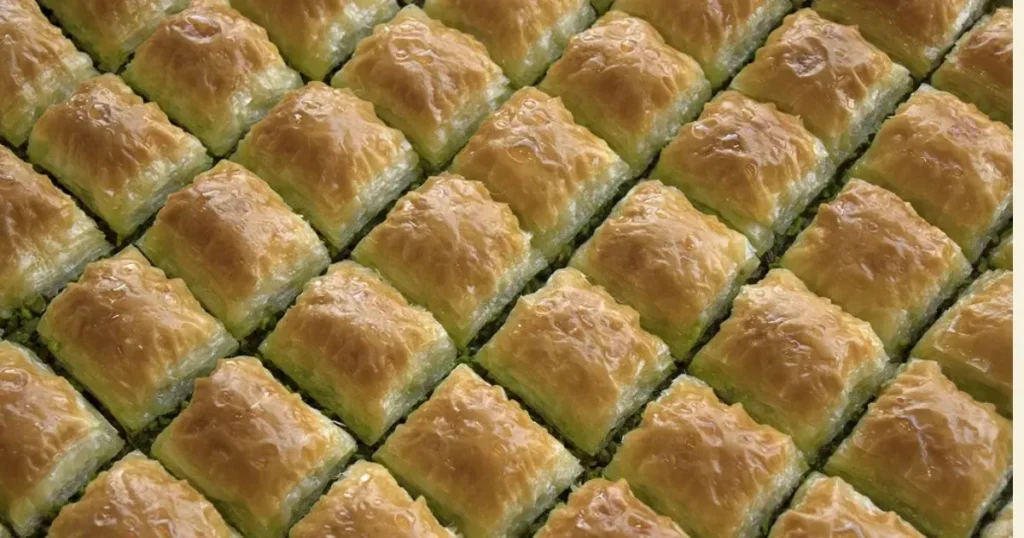
The most accurate answer is that baklava is neither exclusively Turkish nor exclusively Greek.
Turkey can reasonably claim that the modern form of baklava was perfected in Ottoman kitchens, particularly in Istanbul. Greece can equally claim that baklava became deeply embedded in Greek culinary and religious traditions, developing its own identity and flavor profile.
Although modern baklava is closely linked with both Greece and Turkey, historians generally agree that the dessert evolved gradually through several civilizations rather than being invented in one country. Today’s Greek and Turkish versions represent two of the best-known regional styles.
What Makes Greek Baklava Different from Turkish Baklava?
Greek baklava has a distinct style that sets it apart from other regional versions.
Common Characteristics of Greek Baklava
- Nuts: Primarily walnuts, sometimes mixed with almonds
- Sweetener: Honey-based syrup, often with lemon
- Spices: Cinnamon and cloves are common
- Fats: Butter is traditionally used between layers
- Structure: Often made with many layers of phyllo, sometimes symbolically 33
In Greek Orthodox tradition, some baklava recipes use 33 layers of phyllo to represent the years of Christ’s life. This symbolic detail reinforces baklava’s role in Greek religious and cultural celebrations rather than everyday desserts.
Turkish Baklava: A Different Expression
Turkish baklava is equally refined but follows a different philosophy.
Common Characteristics of Turkish Baklava
- Nuts: Pistachios are dominant, especially in Gaziantep
- Sweetener: Light sugar syrup with lemon, minimal honey
- Spices: Rarely used; the nut flavor is central
- Fats: Clarified butter for a lighter finish
- Texture: Crisper, less spiced, and less aromatic
In Turkey, baklava is often judged on precision: the thinness of the phyllo, the clarity of the syrup, and the quality of pistachios. Regional variations are protected and celebrated, with Gaziantep baklava receiving geographical indication status.
Comparison: Greek Baklava vs Turkish Baklava
| Feature | Greek Baklava | Turkish Baklava |
| Primary Nut | Walnuts | Pistachios |
| Sweetener | Honey-based syrup | Sugar syrup |
| Spices | Cinnamon, cloves | Minimal or none |
| Flavor Profile | Warm, aromatic, rich | Clean, nut-forward |
| Cultural Use | Holidays, religious events | Everyday and ceremonial |
Both versions are authentic expressions of the same dessert tradition.
Baklava Beyond Greece and Turkey
Baklava is not limited to just two countries. Across the Middle East and Eastern Mediterranean, the pastry takes many forms.
- Lebanon: Often lighter, with orange blossom or rose water
- Armenia: May include cloves and regional nuts
- Palestine: Pistachio-heavy with floral syrup
- Iran: Related pastries like baghlava use local spices
These variations reinforce the idea that baklava belongs to a shared culinary heritage shaped by trade routes, migration, and empire. Baklava is also a popular choice for celebrations, weddings, and catered events.
Baklava in the United States and New Jersey
In New Jersey, baklava reflects the diversity of its communities. Greek, Turkish, Arab, and Middle Eastern bakeries often coexist in the same neighborhoods, each offering its own interpretation.
In cities like Paterson, where Arab-American culture is vibrant and deeply rooted, baklava frequently appears alongside other Middle Eastern desserts such as knafeh and ma’amoul. Many residents recognize baklava not as a single national dessert, but as a familiar taste of home across different backgrounds.
Restaurants serving Middle Eastern cuisine often highlight baklava as a bridge dessert, something instantly recognizable yet deeply traditional.
Many guests prefer enjoying baklava fresh after a meal when dining in at Al-Basha restaurant.
Why Baklava Is Often Labeled Greek on Menus
Baklava became popular in the U.S. during waves of Greek immigration in the 20th century. Greek-owned diners and restaurants introduced American audiences to the dessert long before Turkish or Arab bakeries became widely known.
Because of that early exposure, baklava became strongly associated with Greek cuisine in public perception. This association persists today, even as more Middle Eastern and Turkish restaurants expand across the country.
How Baklava Is Made: A Shared Process
Despite regional differences, the basic process remains consistent.
- Layer thin sheets of phyllo dough in a pan.
- Brush butter or oil between the layers.
- Spread chopped nuts evenly.
- Cut the pastry before baking.
- Pour hot syrup over freshly baked baklava.
The balance between crisp layers and syrup absorption defines the quality of the final dessert.
Choosing the Best Baklava for Your Taste
The best baklava depends on what flavors you enjoy.
- Prefer warm spices and richness? Greek baklava may suit you
- Love pistachios and lighter sweetness? Turkish baklava is ideal
- Enjoy floral notes? Lebanese styles offer something different
Freshness matters more than origin. Well-made baklava should be crisp, aromatic, and never soggy.
You can explore our freshly made baklava and other authentic desserts on our menu.
Cultural Ownership vs Shared Tradition
Food history rarely fits into modern national categories. Baklava is a perfect example of how dishes evolve across borders. Baklava often plays a central role in cultural festivals and special events across different communities.
According to culinary historians referenced in academic food studies and public archives, baklava’s development reflects centuries of cultural overlap rather than isolated invention. This is why debates about ownership persist, even though the dessert itself tells a story of connection rather than competition.
Final Thoughts: Is Baklava Greek?
Baklava is best understood as a shared culinary tradition rather than a dessert owned by a single country. While Greek baklava is famous for its honey, walnuts, and warm spices, Turkish baklava is celebrated for its delicate phyllo and pistachios. Both styles reflect centuries of history, cultural exchange, and craftsmanship.
Whether you prefer the Greek or Turkish version, enjoying freshly prepared baklava is the best way to appreciate its remarkable heritage.
At Al-Basha, we celebrate this shared heritage by serving freshly prepared baklava inspired by traditional Middle Eastern and Mediterranean recipes.
FAQs
Is baklava Greek or Turkish?
Neither country can claim exclusive ownership. Historians generally agree that baklava developed across the Ottoman Empire, while Greece and Turkey each created distinctive regional versions that remain popular today.
Can I pair baklava with Champagne?
Yes, baklava can pair well with Champagne because the bubbles and acidity help balance the dessert’s rich honey, nuts, and buttery pastry. For celebrations, you can open the bottle with a Champagne saber before serving to make the moment feel more festive.
Where is baklava from originally?
Its roots trace back to ancient Mesopotamia, later refined in Byzantine and Ottoman kitchens.
What is Greek baklava made of?
Greek baklava typically uses phyllo dough, walnuts, cinnamon, cloves, butter, and honey syrup.
Is baklava always made with honey?
No. Greek baklava often uses honey, while Turkish baklava usually relies on sugar syrup.
Why does Greek baklava use 33 layers?
In some traditions, the layers symbolize the years of Christ’s life.