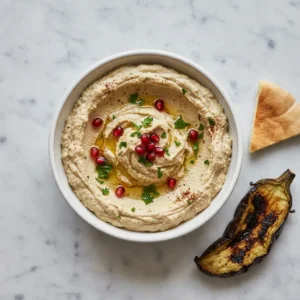
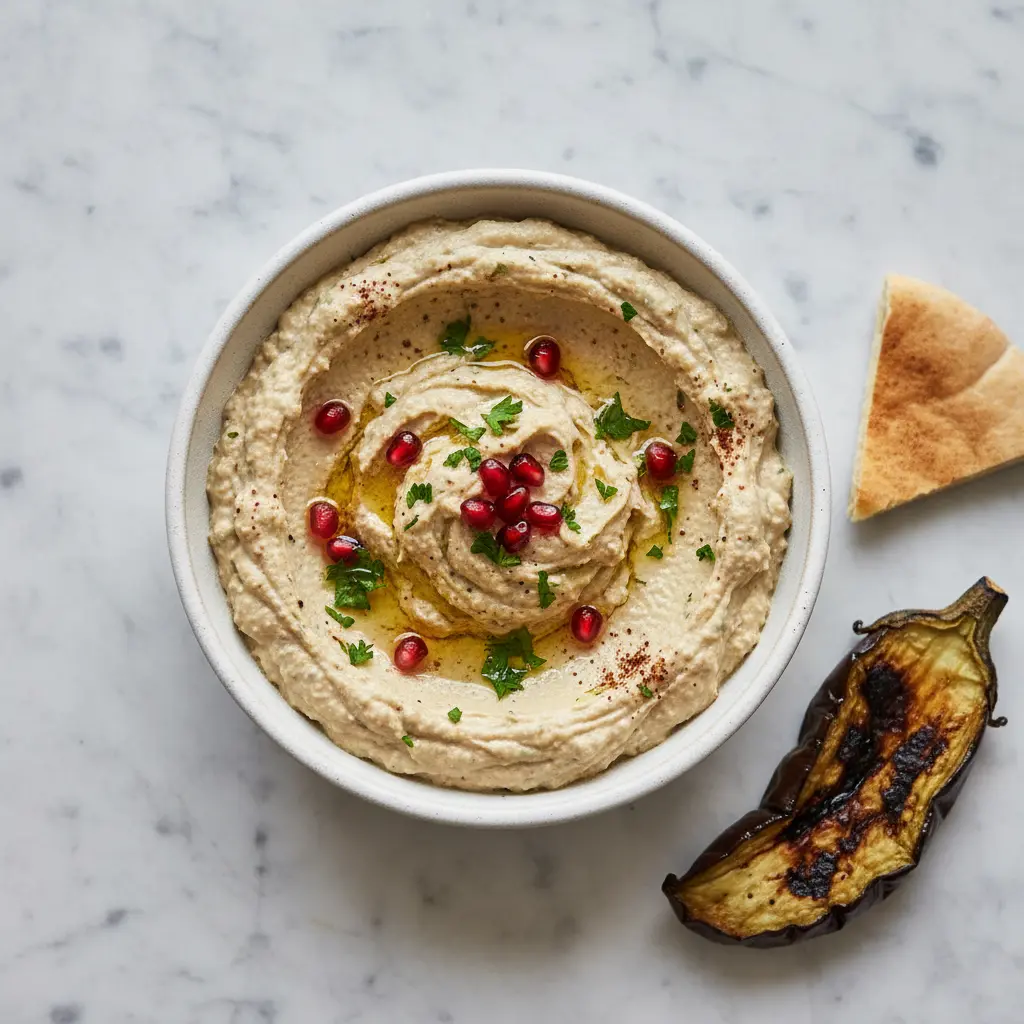

Baba ganoush is a creamy Middle Eastern dip made primarily from roasted eggplant, tahini, lemon juice, garlic, and seasonings. Its smoky flavor and smooth texture make it a popular choice alongside pita, grilled meats, falafel, and other Middle Eastern dishes.
If you are watching your calorie intake or simply want to understand what is in your food, you may be wondering: how many calories are in baba ganoush? The answer depends on the recipe and, especially, the amount of tahini and olive oil used. However, baba ganoush can be a flavorful way to add vegetables and healthy fats to a meal without relying on heavy sauces.
How Many Calories Are in Baba Ganoush?
The number of calories in baba ganoush varies depending on the ingredients and serving size. Eggplant itself is relatively low in calories, while tahini and olive oil contribute most of the fat and calories in many traditional preparations.
A typical serving of baba ganoush can contain roughly 60–100 calories per 2 tablespoons, although restaurant recipes and homemade versions can vary considerably.
For a larger serving, such as about ½ cup, the calorie count may be approximately 150–250 calories, depending on how much tahini and oil are included.
This means that when asking how many calories in baba ghanouj, it is important to consider the recipe rather than relying on one universal number.
What affects the calories in baba ganoush?
Several ingredients can change the nutritional profile:
- Eggplant: Provides the vegetable base and is naturally low in calories.
- Tahini: Adds creamy texture, protein, fat, and calories from sesame seeds.
- Olive oil: Increases the calorie and fat content.
- Lemon juice: Adds acidity and flavor with very few calories.
- Garlic: Contributes flavor and small amounts of nutrients.
- Seasonings: Usually have a minimal effect on total calories.
At Al-Basha, baba ganoush fits naturally into a menu built around flavorful Middle Eastern food and traditional ingredients.
Baba Ganoush Nutrition Information
Understanding baba ganoush nutrition info requires looking beyond calories. The dip can provide a combination of carbohydrates, fats, fiber, and smaller amounts of protein and micronutrients.
The exact numbers depend on preparation, but the main nutritional contributors are easy to understand.
Eggplant provides the foundation. It contains water and dietary fiber while contributing relatively few calories. Tahini, made from sesame seeds, provides most of the dip’s healthy fats and also contributes protein and minerals.
Olive oil can add another source of unsaturated fat when used in the recipe.
Because recipes differ, nutrition labels or restaurant-specific serving information should be used when an exact calorie or nutrient count is required.
Baba Ganoush Nutrition Facts
The most useful baba ganoush nutrition facts are related to its ingredients.
Calories
Baba ganoush is generally moderate in calories, especially when compared with richer creamy dips. However, larger amounts of tahini or olive oil can substantially increase calories.
Fat
Tahini and olive oil are the primary sources of fat. These ingredients contain predominantly unsaturated fats, which are commonly included in balanced eating patterns.
Carbohydrates
Eggplant contributes some carbohydrates, while lemon juice and garlic add small amounts. The total carbohydrate content of baba ganoush is generally modest.
Fiber
Eggplant provides dietary fiber, making it one reason baba ganoush can be a satisfying addition to a meal.
Protein
Tahini contributes some plant-based protein, although baba ganoush should not generally be considered a major protein source.
How Many Carbs Are in Baba Ghanouj?
If you are specifically searching for carbs in baba ghanouj, the amount depends on the serving size and recipe.
Eggplant contains carbohydrates naturally, but baba ganoush does not typically contain large amounts of added carbohydrates. Tahini also contributes some carbohydrates along with fat and protein.
A small serving can therefore fit into many eating patterns where carbohydrate intake is being monitored. The biggest difference usually comes from what is served with the dip. Pita bread, crackers, and other accompaniments can contribute significantly more carbohydrates than the baba ganoush itself.
For another look at traditional Middle Eastern foods and ingredients, see our overview of what is Mediterranean food.
What Is the Nutritional Value of Baba Ganoush?
The nutritional value of baba ganoush comes from the combination of eggplant, sesame-based tahini, lemon, garlic, and other ingredients.
Eggplant provides fiber and plant compounds while keeping the base of the dip relatively light. Tahini adds sesame seed nutrients, including fats and some protein. Lemon juice provides acidity and vitamin C, while garlic adds flavor and small amounts of nutrients.
The result is a dip that can contribute vegetables, fiber, and unsaturated fats to a meal.
Of course, nutritional value is only one part of a healthy diet. Portion size and the foods eaten alongside baba ganoush also matter.
Is Baba Ganoush Good for You?
So, is baba ganoush good for you? For many people, it can be a nutritious addition to a balanced diet.
Its main ingredients offer several nutritional advantages:
Eggplant provides fiber.
As the main ingredient, eggplant gives baba ganoush its vegetable base and contributes dietary fiber.
Tahini provides healthy fats.
Tahini is made from ground sesame seeds and adds unsaturated fats along with some plant protein and minerals.
It can be vegetable-forward.
Unlike dips based primarily on cheese or heavy cream, traditional baba ganoush is centered around roasted eggplant.
It can be filling.
The combination of fiber and fat can make a serving more satisfying than some lighter sauces.
It is versatile.
Baba ganoush can be paired with vegetables, pita, grilled meats, falafel, or used as part of a larger Middle Eastern meal.
For more information about the role of olive oil in traditional cooking, you can also explore the role of olive oil in authentic Mediterranean kitchens.
Baba Ganoush vs. Calories in Other Dips
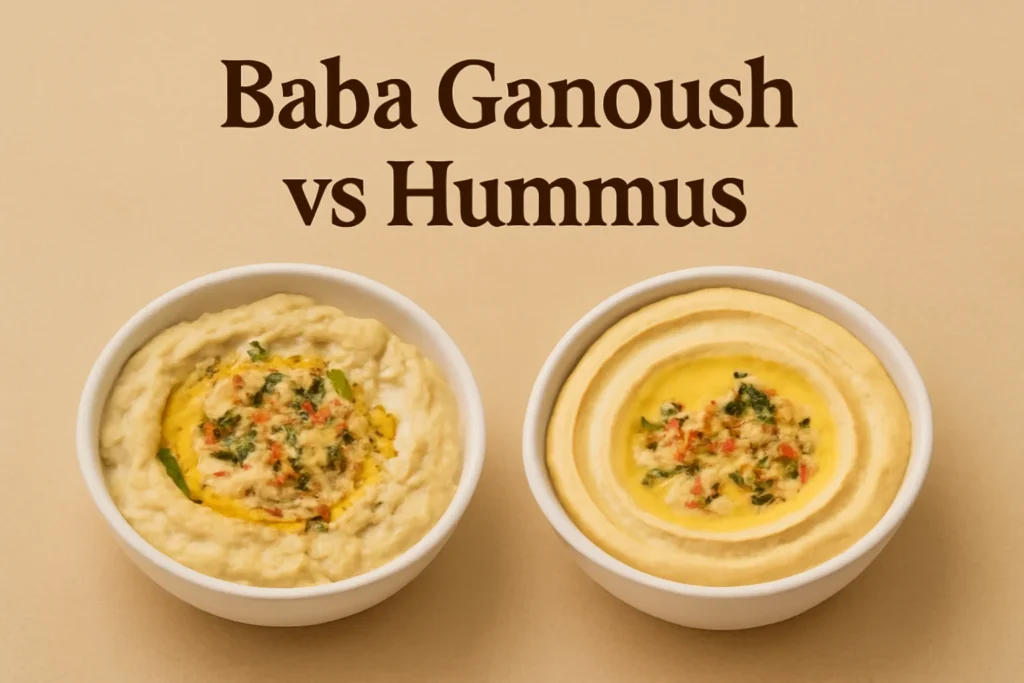
Calories alone do not tell the entire nutritional story. Two dips may have similar calorie counts but very different ingredient profiles.
Baba ganoush gets its character from roasted eggplant, tahini, lemon, and garlic. The amount of tahini and oil can determine how calorie-dense the finished dip becomes.
This is also why restaurant portions can differ from homemade portions. A recipe containing more tahini or olive oil will generally contain more calories than a lighter version.
If you are interested specifically in the differences between these two popular Middle Eastern dips, Al-Basha also has a dedicated resource on baba ganoush vs. hummus. That comparison covers the distinction between the dishes rather than focusing on overall baba ganoush nutrition.
How to Include Baba Ganoush in a Balanced Meal
Baba ganoush can be used in several ways without making it the entire meal.
Serve it with fresh vegetables for a simple appetizer. Pair it with grilled chicken, lamb, or other proteins for a more complete meal. It can also accompany falafel, pita, salads, and other Middle Eastern dishes.
Portion size matters if you are specifically tracking calories. Since tahini and olive oil are energy-dense ingredients, eating a very large amount can increase total calorie intake even though the dip itself contains nutritious ingredients.
The same principle applies to pita and other foods served with it. A moderate serving of baba ganoush with vegetables or a balanced meal can be quite different nutritionally from a large portion served with several pieces of pita.
For more ideas about traditional accompaniments, explore what to eat with hummus, which includes pairing ideas that can also work well across Middle Eastern meals.
Frequently Asked Questions About Baba Ganoush Nutrition
How many calories are in baba ganoush?
A typical 2-tablespoon serving may contain around 60–100 calories, while a ½-cup serving can contain approximately 150–250 calories. The actual amount varies according to the recipe, particularly the quantity of tahini and olive oil.
Is baba ganoush high in carbs?
Baba ganoush is generally not considered a high-carbohydrate dip. Eggplant contributes some carbohydrates, while tahini and the other ingredients contribute smaller amounts. However, foods served with the dip, such as pita bread, can add substantially more carbohydrates.
Is baba ganoush healthy?
Baba ganoush can be part of a balanced diet. Eggplant provides fiber, while tahini and olive oil contribute unsaturated fats. The overall nutritional profile depends on ingredients, preparation, and portion size.
Does baba ganoush have protein?
Yes. Tahini contributes plant-based protein, although baba ganoush is not normally considered a high-protein food. Pairing it with a protein-rich food can create a more substantial meal.
Is baba ganoush healthier than other dips?
There is no single answer because recipes and serving sizes vary. Baba ganoush can be a nutritious option because it is based on roasted eggplant and commonly includes tahini and olive oil. The best choice depends on the overall ingredients and how much you eat.
Enjoy Baba Ganoush at Al-Basha
Baba ganoush is a flavorful example of how roasted vegetables, tahini, lemon, and simple seasonings can come together in a traditional Middle Eastern dish. Its calorie content depends on the recipe, but it can provide fiber, unsaturated fats, and other nutrients while adding smoky flavor to a meal.
If you are in Paterson, NJ and want to experience Palestinian and Middle Eastern flavors, explore the Al-Basha menu and discover dishes that pair naturally with baba ganoush and other traditional favorites.
For more food and cultural stories, visit Al-Basha, where you can explore the flavors inspired by Ramallah.