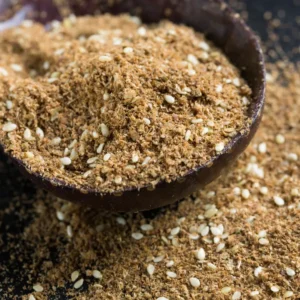

Za’atar is a traditional Middle Eastern herb and spice blend known for its earthy aroma, tangy flavour and nutty sesame notes. In Palestinian cuisine, it is commonly mixed with olive oil and served with fresh bread, while other uses include seasoning vegetables, enhancing dips and adding flavour to grilled dishes. Traditional za’atar blends typically combine dried herbs, sumac, toasted sesame seeds and salt, although ingredients and proportions vary between households and regions.
From a simple breakfast dip to a topping for freshly baked flatbread, za’atar demonstrates how a few everyday ingredients can create a distinctive flavour. Understanding what za’atar contains, how it tastes and which foods complement it makes it easier to appreciate its place in Palestinian food culture.
What Is Za’atar?
Za’atar refers to both an aromatic herb associated with the Eastern Mediterranean and a seasoning blend made from dried herbs and other ingredients. In everyday cooking outside the region, the word most often refers to the prepared spice mixture.
The blend is closely associated with Palestinian and wider Levantine food traditions, where herbs, olive oil and bread have long been important parts of everyday meals. Its appeal comes from the balance of savoury herbs, tangy sumac and toasted sesame rather than heat from chilli or strong sweetness.
Za’atar is versatile enough for breakfast, light meals, appetisers and main dishes. It can be mixed with olive oil for dipping, spread over bread before baking or sprinkled over vegetables and other savoury foods.
Its exact composition depends on the recipe. Some blends have a stronger herbal character, while others contain more sumac for acidity or sesame for a nuttier finish.
What Is Za’atar Made Of?
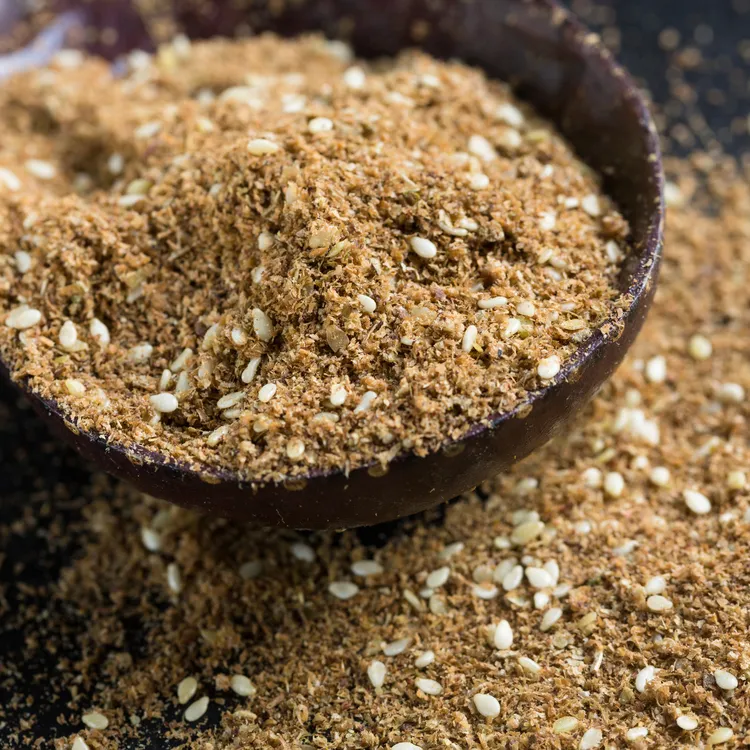
Traditional za’atar usually combines four main components: dried herbs, sumac, sesame seeds and salt. Each ingredient contributes a different part of the blend’s overall flavour and texture.
1. Dried Thyme and Other Aromatic Herbs
Herbs provide za’atar with its earthy, savoury foundation. Depending on the region and recipe, a blend may use wild za’atar, thyme, oregano, marjoram or related herbs.
The specific herb makes a noticeable difference. Some varieties have a bold, slightly peppery aroma, while others offer softer, more floral notes.
In Palestinian preparations, the dried herb is central to the character of the seasoning. It gives za’atar its recognisable herbal aroma and distinguishes it from blends based primarily on warm spices.
2. Sumac
Sumac is a reddish-purple spice made from dried berries. It adds a tart, citrus-like flavour that balances the earthy herbs and rich sesame seeds.
Its acidity gives za’atar a bright finish without requiring lemon juice in every preparation. This is one reason the seasoning works well with olive oil, bread, creamy dips and rich savoury foods.
The proportion of sumac varies between blends, so some versions taste noticeably tangier than others.
3. Toasted Sesame Seeds
Sesame seeds contribute a toasted, nutty flavour and a little texture. Their richness balances sumac’s tartness and complements the dried herbs.
Toasted sesame also helps za’atar work particularly well with olive oil and baked bread. Together, these ingredients create a savoury topping that is aromatic, slightly crunchy and full of flavour.
Important: Sesame is an allergen. Anyone with a sesame allergy should check the ingredient label and avoid blends containing sesame.
4. Salt
Salt brings the other ingredients together by enhancing their natural flavours. The amount varies according to the recipe and intended use.
Some commercial blends may also include additional herbs, spices or other ingredients. For that reason, it is worth checking the label rather than assuming every za’atar product has the same composition.
What Does Za’atar Taste Like?
Za’atar has an earthy, herbal, tangy and slightly nutty flavour. The exact balance depends on the herbs used, the amount of sumac and sesame, and whether the sesame seeds have been toasted.
Its main flavour characteristics include:
- Earthy and herbal: Dried thyme, oregano or related herbs provide a savoury, aromatic base.
- Tangy and citrus-like: Sumac contributes a bright, slightly sour taste.
- Nutty and toasted: Sesame seeds add richness and a subtle roasted flavour.
- Lightly salty: Salt enhances the herbs and balances the other ingredients.
Za’atar is not necessarily spicy in the chilli-hot sense. Instead, it adds complexity through the combination of herbs, acidity and toasted seeds.
When mixed with olive oil, the seasoning becomes a flavourful dip or spread. When baked onto bread, its aroma becomes more pronounced and the sesame develops a deeper toasted character.
How Is Za’atar Traditionally Used in Palestinian Cuisine?
Za’atar has an important place in Palestinian food traditions, particularly in everyday breakfasts and simple bread-based meals. It can turn a few basic ingredients into a satisfying combination of textures and flavours.
Za’atar with Olive Oil and Bread
One of the most familiar ways to enjoy za’atar is to combine it with olive oil and serve it alongside fresh flatbread or pita.
The oil helps distribute the seasoning and softens its dry texture, while the bread provides a neutral base that allows the herbs, sesame and sumac to stand out.
The preparation is straightforward: place the seasoning in a small dish, add olive oil gradually and stir until the mixture reaches the desired consistency. Serve it with bread for dipping.
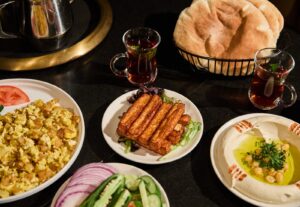
This combination is particularly relevant to traditional Palestinian breakfast tables, where bread, olive oil, herbs, vegetables and other savoury foods may be served together.
To explore the wider meal, read Al-Basha’s article on Palestinian Breakfast: Traditional Foods and What to Expect.
Za’atar on Flatbread
Za’atar can also be spread over flatbread before baking. When combined with olive oil, it forms a savoury topping that releases its aroma as the bread cooks.
The finished bread can be enjoyed as a snack, a breakfast food or part of a larger meal. Its flavour works well alongside fresh vegetables, olives and other savoury accompaniments.
Although flatbread preparations vary across the Levant, the combination of herbs, oil and bread remains a simple way to appreciate za’atar’s flavour.
Za’atar with Labneh and Cheese
Labneh is a strained yoghurt product with a thick texture and a pleasantly tangy taste. Sprinkling za’atar over labneh adds herbal aroma, a hint of acidity and a contrasting sesame texture.
The same principle applies to suitable cheeses. Creamy or mild cheeses provide a rich base that balances the seasoning’s sharper notes.
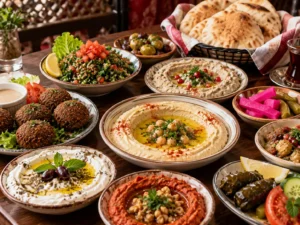
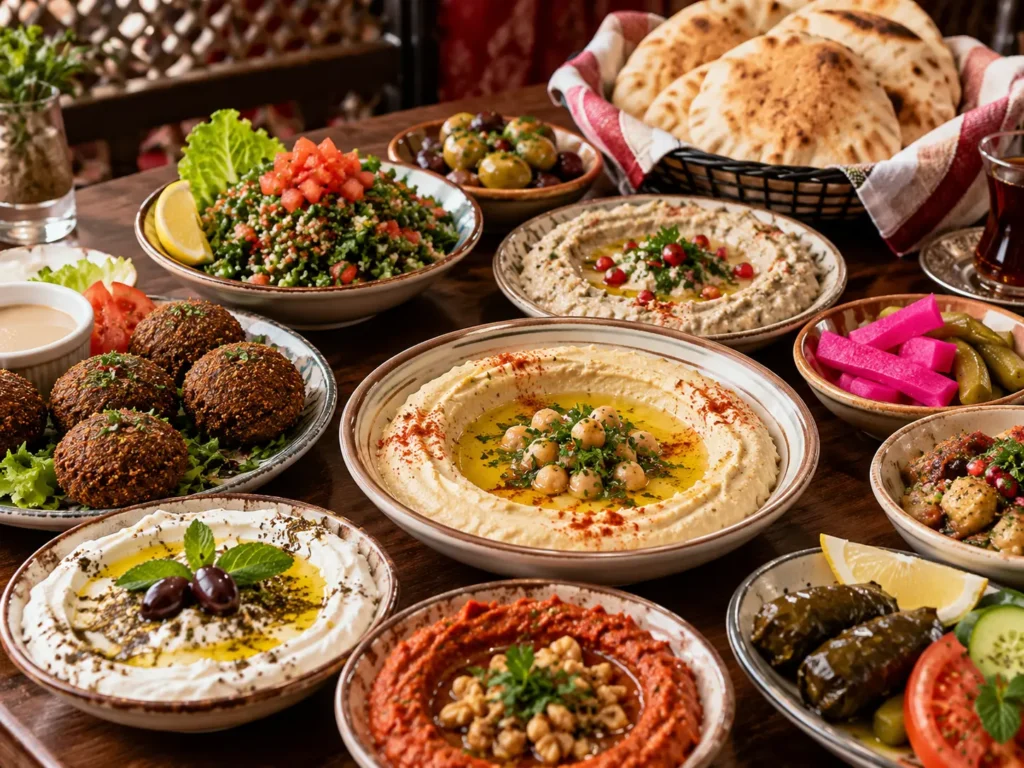
These combinations work well on a shared appetiser table, especially when served with bread, olives and fresh vegetables.
For more on shared Middle Eastern dining, see What Is Mezze? How to Order and Share Middle Eastern Appetisers.
What Foods Pair Best with Za’atar?
Za’atar pairs well with foods that complement its herbal aroma, tangy flavour and toasted sesame notes. It can be used as a finishing seasoning, mixed into a dressing or combined with olive oil before cooking.
| Food | Why It Works |
| Pita and flatbread | Their mild flavour lets the herbs and sumac stand out. |
| Olive oil | Adds richness and creates a simple dip or spread. |
| Labneh and yoghurt-based dips | Creaminess balances the tangy seasoning. |
| Hummus | Adds herbal depth and texture to a smooth chickpea dip. |
| Tomatoes and cucumbers | Fresh vegetables complement the earthy and tangy notes. |
| Roasted potatoes | Crisp surfaces and soft interiors work well with the seasoning. |
| Roasted vegetables | Olive oil carries the aromatic flavours across the vegetables. |
| Grilled chicken and other meats | The herbs provide savoury depth, while sumac adds brightness. |
| Eggs | A light sprinkle adds flavour to a simple breakfast. |
| Cheese | Creamy and mild varieties balance the blend’s herbal character. |
The best pairing depends on how the za’atar is prepared. A blend mixed with olive oil works naturally as a dip, while dry seasoning is convenient for sprinkling over cooked vegetables or finishing a dish.
Can You Use Za’atar on Meat and Vegetables?
Yes. Za’atar can be used to season chicken, meat and vegetables, although the amount and method should suit the dish.
For vegetables, mix a small amount of seasoning with olive oil and coat the vegetables before roasting. For grilled chicken, combine za’atar with olive oil and use it as part of a marinade or seasoning mixture. Add lemon juice or garlic if they complement the recipe.
It can also be sprinkled over cooked vegetables shortly before serving. This preserves more of its aromatic character and allows the seasoning to remain noticeable.
For Palestinian food inspiration beyond individual ingredients, explore What Is Palestinian Food? Famous Dishes to Try.
What Is the Difference Between Za’atar and Thyme?
Za’atar and thyme are related, but they are not interchangeable terms in every context.
Thyme is an aromatic herb used in many cuisines. Za’atar may refer to a particular wild herb or, more commonly in English-language food discussions, a seasoning blend containing herbs, sumac, sesame seeds and salt.
| Feature | Thyme | Za’atar Seasoning Blend |
| Main ingredients | Thyme leaves | Dried herbs, sumac, sesame and salt |
| Flavour | Herbal, earthy and slightly minty | Herbal, tangy, nutty and savoury |
| Texture | Fresh leaves or dried herb | Usually a dry, coarse seasoning |
| Typical use | Soups, sauces, marinades and roasted foods | Bread, dips, vegetables and savoury dishes |
Dried thyme can contribute to a homemade za’atar-style blend, but thyme alone will not reproduce the tanginess of sumac or the toasted flavour of sesame.
Is Za’atar the Same Across the Middle East?
No. Za’atar recipes vary across households, regions and producers. The proportions of herbs, sumac and sesame may change, and some versions include additional seasonings.
Palestinian za’atar is especially associated with the combination of dried herbs, olive oil and bread. However, there is no single recipe that represents every Palestinian household or every commercial product.
Lebanese, Syrian, Jordanian and other Levantine preparations may share similar ingredients while differing in their proportions and flavour profiles.
These variations are part of what makes traditional seasoning blends interesting: the same basic combination can taste different depending on local ingredients and family preferences.
How Should You Store Za’atar?
Store dried za’atar seasoning in an airtight container in a cool, dry place away from direct sunlight, heat and moisture.
Proper storage helps preserve the blend’s aroma and flavour. Always use a clean, dry spoon to prevent moisture from entering the container, and follow any storage instructions on the product label.
If you prepare za’atar with olive oil, make only the amount you intend to use promptly unless you have a tested food-safe storage method. A dry seasoning blend and a prepared oil mixture do not have the same storage requirements.
Before using a packaged blend, check its ingredients, allergen information and best-before date.
Frequently Asked Questions About Za’atar
What is za’atar made of?
Za’atar is commonly made from dried herbs, sumac, toasted sesame seeds and salt. Some recipes use wild za’atar, while others include thyme, oregano, marjoram or additional seasonings.
What does za’atar taste like?
Za’atar has an earthy, herbal, tangy and nutty flavour. Herbs provide the savoury base, sumac adds citrus-like tartness, and sesame contributes a toasted richness.
How do you eat za’atar traditionally?
A familiar Palestinian preparation combines za’atar with olive oil and serves it with bread. The seasoning is also used on flatbread and paired with labneh, vegetables and other savoury foods.
Is za’atar spicy?
Za’atar is generally not hot like chilli-based seasonings. Its flavour is primarily herbal, tangy and nutty, although individual blends may contain additional spices.
Can za’atar be used on chicken and vegetables?
Yes. Za’atar can season chicken, roasted vegetables, potatoes and other savoury foods. It can be mixed with olive oil for a coating or sprinkled over prepared dishes as a finishing seasoning.
Is za’atar a Palestinian spice?
Za’atar is strongly associated with Palestinian culinary traditions and is also used throughout the wider Levant. Recipes vary by region, so the exact ingredients and flavour are not identical everywhere.
Is za’atar the same as sumac?
No. Sumac is a spice made from dried berries and contributes a tangy flavour to za’atar. Za’atar is the broader herb or seasoning blend, which commonly contains sumac alongside herbs, sesame seeds and salt.
Experience the Flavours of Palestinian Cuisine
Za’atar offers a simple introduction to the flavours that characterise much of Palestinian cooking: aromatic herbs, olive oil, bread and ingredients that complement one another without unnecessary complexity. Whether served as a dip, baked onto flatbread or sprinkled over vegetables, its appeal lies in the balance of earthy, tangy and nutty notes.
Exploring individual ingredients is also a useful way to understand the wider cuisine, from traditional breakfasts to shared appetisers and substantial family meals.
If you are exploring Palestinian food in New Jersey, visit Al-Basha to discover its restaurant experience and menu offerings. You can also read our article on the best dishes to order at Al-Basha’s Palestinian Grill in Paterson, NJ before planning your visit.