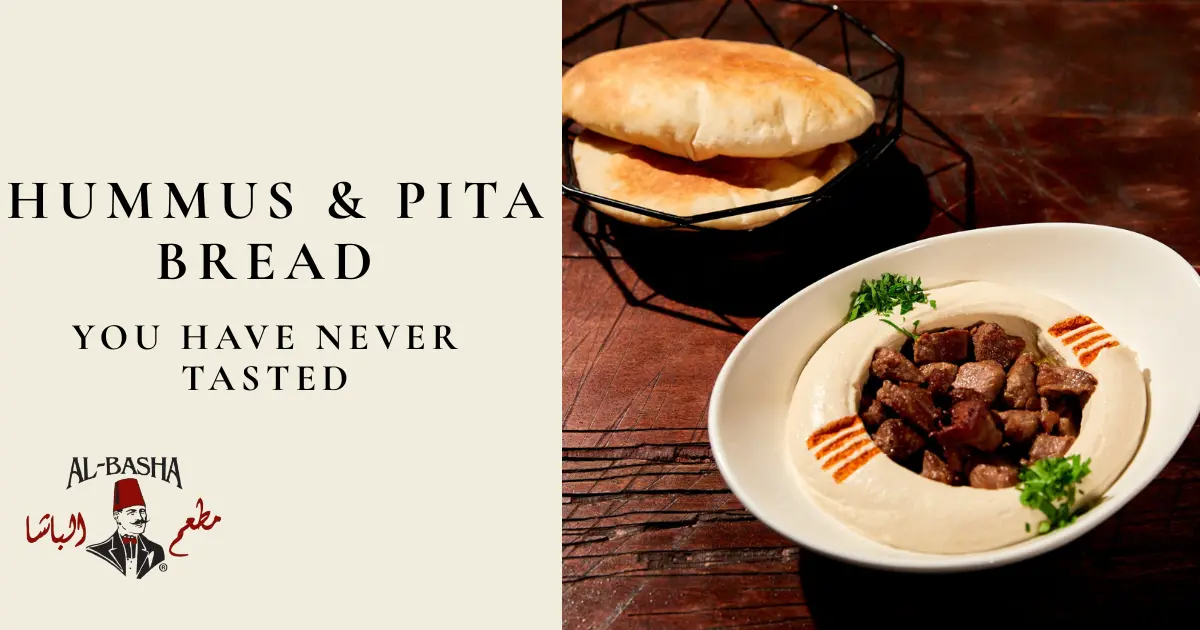

Hummus and pita bread are a popular Middle Eastern food combination made of creamy chickpea-based hummus served with soft, warm pita bread. It is widely enjoyed as a dip-and-bread pairing in Middle Eastern cuisine.
Heard of matches made in heaven? Hummus and Pita bread may just be one of them. It’s one of those magical combinations that just clicks with everyone.
This pairing of a soft, warm hummus on pita bread comes from a complex and unique food culture where the dishes are rarely served alone.
Hummus and Pita bread are from the Middle Eastern cuisine, where food is often paired, such as bread with dips, meats with sauces, and vegetables with grains. Hummus pita is one of the most loved pairings globally.
What is Hummus?
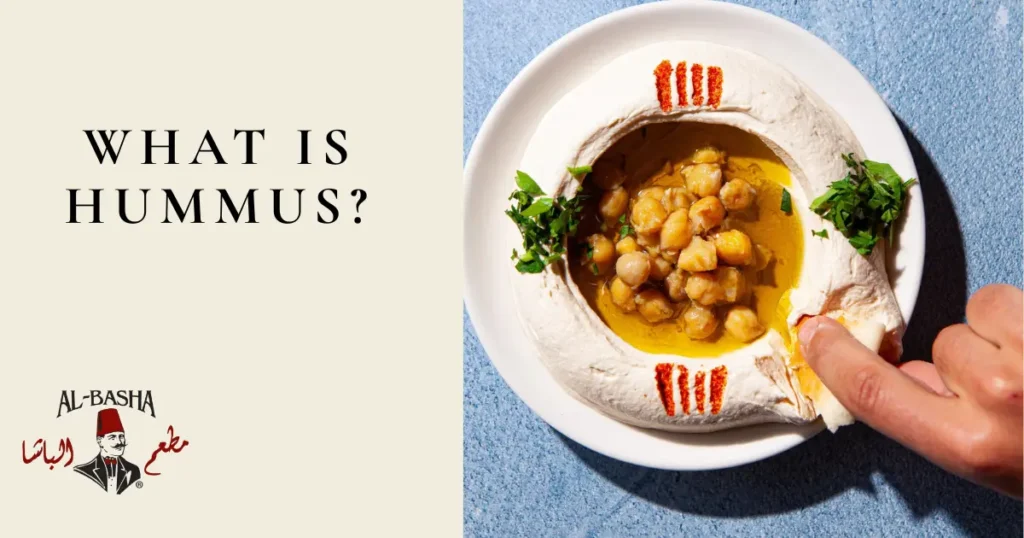
As mentioned, hummus is a traditional Middle Eastern spread made from blending chickpeas, tahini, olive oil, lemon juice, and garlic to create a smooth, creamy texture.
Once blended, the ingredients become very well balanced in flavor and texture both. The chickpeas provide body, tahini adds depth, lemon brings brightness, and garlic enhances the overall flavor without overpowering it. When prepared correctly, hummus has a light, velvety consistency and a well-rounded taste.
Learn more about our story at Al-Basha and how we bring traditional Middle Eastern flavors to life.
What is Pita?
Pita is a bread and one of the most popular ones in the Middle East. When it bakes at high heat, the dough puffs up and creates a pocket. This makes the pita bread very flexible and you can tear it, stuff it, or use it to scoop.
Fresh pita is soft, not too thick, and not too dry. When warmed, it becomes even easier to work with.
Some people toast it lightly, which adds a bit of crispness to the bread’s outer side. Whole-grain pita bread versions provide additional fiber, which is why they’re often included in balanced diets, as noted by Cleveland Clinic.
Enjoy a full dine-in experience at Al-Basha with freshly prepared Middle Eastern dishes.
Make The Best Hummus
After trying freshly made Hummus, the store-bought version will start to feel flat. In the store, once the texture isn’t quite there, the flavor feels off, and it just doesn’t taste the same.
Fresh hummus is smoother, lighter, and when you pair it with warm pita, it usually disappears pretty quickly.
There’s no single way to enjoy hummus on pita; you can keep it classic by tearing and dipping, spread it as a base with veggies or meat, or lightly toast the pita for a bit of crunch.
Explore our full Al-Basha menu to discover more authentic dishes beyond hummus and pita.
What You Will Need
What You Will Need
- Canned garbanzo beans – rinsed properly to clean the flavor
- Baking soda – a small amount to soften the beans
- Tahini paste – gives hummus its nutty, rich taste
- Garlic – start with two cloves (adjust as needed)
- Lemon juice – fresh for a sharp, clean finish
- Ground cumin – adds depth
- Salt – enhances overall flavor
- Olive oil – improves texture
- Fresh parsley – for garnish and freshness
- Pita bread – soft, bakery-style preferred
How to Make It
Prep the Beans
Drain the chickpeas and rinse them. Keep a small handful aside for later. The rest go into a pot with water and a bit of baking soda. Let them simmer for around 15 minutes. You’ll notice they get softer than usual; that’s exactly what you want.
Start Blending
Drain them again and rinse quickly with cold water so there’s no baking soda taste left. Add them to a food processor with the tahini and start blending. At first, it might look thick but that’s normal.
Add the Flavor
Add lemon juice, garlic, salt, and cumin. Blend again. At this point, it should start coming together, but it might still feel slightly dense.
Add the Olive Oil
Keep the processor running and slowly pour in the olive oil. This part matters. Adding it slowly helps everything combine better and gives it that lighter, smoother finish.
Warm the Pita and Serve
Scoop the hummus into a bowl. Add a bit of olive oil on top, the chickpeas you set aside, and some parsley
Soft Pita Bread
Making pita bread at home might sound like a whole process at first. But once you actually try it, it’s not as complicated as it seems. You’re really just working with a few basics, flour, yeast, salt, and water. That’s it. Nothing fancy. But here’s the thing… what actually matters isn’t the ingredients as much as how you handle them. And especially how you bake it.
Because pita isn’t just flatbread. That might sound obvious, but there’s more to it. What makes it pita is that pocket inside. The part you can open up or use for dipping. And that doesn’t just happen randomly.
Now here’s where things get a bit interesting. When you put the dough into a really hot oven, the moisture inside reacts quickly. It turns into steam, and that steam pushes the dough apart from the inside. That’s what creates that hollow space.
If the heat isn’t high enough, you’ll still get bread… but it won’t puff up the same way. It’ll just stay flat. And that’s a small detail people often overlook. You might think the recipe is the main thing. But the temperature does most of the work here.
Ingredients
- Flour — 3 cups (plus extra for dusting)
- Yeast — 2 teaspoons (active dry)
- Salt — 1 teaspoon
- Warm water — 1 cup
- Olive oil — 1 tablespoon (optional)
Instructions
Make the Dough
Start by mixing the warm water and yeast in a bowl. Let it sit for a few minutes, you’re looking for a slightly foamy surface, which tells you the yeast is active. Add the flour and salt, then mix until everything comes together into a rough dough. It doesn’t need to look perfect at this stage.
Knead and Let It Rise
Move the dough onto a floured surface and knead it for about 5 to 7 minutes. You’ll feel the change, it goes from slightly rough to smoother and more elastic. That’s when you know it’s ready. Place it in a lightly oiled bowl, cover it, and leave it somewhere warm. After about an hour, it should have doubled in size.
Shape the Dough
Once it has risen, press it down gently to release the air. Divide it into 8 pieces and roll each one into a ball. Then flatten them into circles, roughly a quarter-inch thick. Try to keep the thickness even, uneven dough won’t puff properly.
Bake at High Heat
Preheat your oven to 245°C (475°F). If you have a baking stone or heavy tray, let it heat up inside the oven first. That hot surface is what triggers the puff. Place the dough directly onto it and bake for about 3 to 5 minutes. You’ll see them rise quickly, sometimes within seconds. That’s the pocket forming.
Keep Them Soft
Once they’re done, take them out and wrap them in a clean kitchen towel while they’re still warm. This step matters more than it seems. The trapped steam keeps the bread soft and prevents it from drying out too quickly.
When it’s done right, the result is noticeably different. The pita stays soft, opens easily, and holds whatever you pair it with, especially something like hummus, without falling apart.
Storage and Shelf Life Guide
Once you’ve made pita and hummus from scratch, the next step is just making sure they stay the way they’re supposed to, fresh, not dried out, not losing texture.
Homemade food doesn’t have preservatives, so it reacts differently. Even a small thing, like how tightly something is sealed or how long it sits out, can change the result.
Homemade Hummus
Homemade Hummus
- Store in the fridge
- Use an airtight container
- Add a thin layer of olive oil on top
- Lasts 4–7 days
- Can be frozen up to 3 months
Fresh Pita Bread
- Room temperature: up to 2 days
- Fridge: up to 1 week
- Freezer: up to 3 months
Reheating:
Use a hot pan, toaster, or oven to restore softness.
How To Refresh Your Pita and Use Leftovers
The best way to refresh dry pita is to lightly flick a few drops of water onto both sides of the bread. You don’t want to soak it, just damp it a little.
Then, wrap it in a damp paper towel and microwave it for about 15 to 20 seconds. The steam will make it soft and flexible again.
If you prefer the oven, wrap the damp pita in aluminum foil and warm it at 180°C for about five minutes. It will come out tasting like you just baked it.
Wrapping It Up
If you want to explore authentic Middle Eastern food, visit Al-Basha, an authentic Middle Eastern restaurant for fresh hummus and pita.
So if you don’t want to go through the hassle of making pita and hummus at home and want to try great-quality hummus, Al-Basha is the place, not only for hummus but also for many other
The hummus is smooth without being heavy, the flavor feels balanced, and the pita is exactly how it should be. It’s the kind of place you go to when you want some great Middle Eastern food.
Want to be part of our team? Join Al-Basha careers and grow with us.
FAQs
1. What is hummus made of?
Hummus is made from blended chickpeas, tahini, olive oil, lemon juice, garlic, and salt. It has a smooth, creamy texture and a balanced flavor.
2. Is hummus healthy?
Yes, hummus is considered healthy because it is rich in plant-based protein, fiber, and healthy fats, making it a good option for a balanced diet.
3. What is pita bread?
Pita is a soft Middle Eastern bread made from simple ingredients like flour, yeast, water, and salt. It forms a pocket when baked at high heat.
4. Are hummus and pita bread vegan?
Yes, both hummus and pita bread are naturally vegan as they are made from plant-based ingredients.
5. How do you eat hummus with pita bread?
You can dip warm pita into hummus, spread it inside the bread, or use it with vegetables, meats, or grilled dishes.